
What Grandchildren's Parents Actually Want From You - And Why It Matters
By Neil Taft
QUICK SUMMARY
What grandchildren’s parents want from grandparents is usually respect, support, consistency, and trust. When grandparents honor parental authority and avoid criticism, they strengthen the relationship that gives them access to their grandchildren and helps the whole family stay connected.
Something is shifting in American families. And most grandparents can feel it, even if they can’t quite name it.
Families are more mobile. More blended. More stressed. And adult children today are far more likely to draw a hard boundary when they feel disrespected than any previous generation.
You don’t need a research degree to see it. You just need to look at the families around you.
And yet – here is what I’ve come to believe after 80+ years of family life, 4 books, and nearly 500 published articles on grandparenting:
Most of this is preventable. And most of it is repairable.
But only if grandparents are willing to ask a question most of us were never taught to ask.
The Question Nobody Is Asking
What do their parents actually want from me?
Not what we assume they want. Not what we think they should want. Not what worked in our generation. What do the parents of our grandchildren – the people steering the ship – actually need from us right now?
That question is the foundation of my upcoming book, The Bridge To Your Grandchildren: What Their Parents Want You To Know. And it grew directly out of a moment that stopped me cold.
Earlier this year I said something on The Rebel Rootz Show that reached 1.9 million people on TikTok. The response – hundreds of thousands of comments from grandparents, mothers, daughters-in-law, and adult children – confirmed what I had long believed but rarely heard said plainly:
The most important relationship in grandparenting isn’t between grandparent and grandchild. It’s between grandparent and parent.
Tend that relationship well, and the door to your grandchildren stays open. Neglect it, and no amount of love for your grandchildren will keep it from closing.
Both/And, Not Either/Or
Here is the reframe that changes everything.
Most family conflict lives in an Either/Or world. Either I’m right or you’re right. Either my way or your way. Either I matter or you matter.
What real families need – what grandchildren need – is a Both/And approach.
Both grandparents and parents matter. Both love and respect are required. Both tradition and modern realities must be considered.
This isn’t about surrendering your wisdom or pretending you don’t have experience worth sharing. It’s about recognizing that the family landscape has changed, and standing still is the same as going backwards.
The grandchildren caught in the middle of unresolved family tension didn’t create it. They don’t deserve to carry it. And they are the ones who lose the most when grandparents and parents can’t find their way to the same side.
What Parents Actually Want – Right Now
The book goes deep on all of this. But here are the practical moves that set the tone for everything else.
With the parents: Ask what supports their parenting priorities – sleep routines, screen time, food, discipline. Keep your agreements, especially the small ones. Nothing builds trust faster than consistency in the quiet moments. And when Mom is doing something well, say so out loud – sometimes in front of the kids.
With your grandchildren: Ask them to teach you something they love. A game, a sport, a song, an app. Enter their world before you invite them into yours. And as they grow, shift your approach with them – from picture books to projects, from playgrounds to real conversations, from phone calls to texts.
When you miss the mark: Name the impact, not your intention. “I can see that landed wrong. I’m sorry” goes further than any explanation of what you meant. Ask, “What would feel supportive next time?” Then do it.
The Electronic Hug
One of the most practical habits I’ve developed over the years is what I call an Electronic Hug – a short, consistent message that says three things without saying them directly: I see you. I’m for you. I’m here.
Keep it short – one to three sentences. Make it warm, not intrusive. Don’t attach a request. Aim for weekly consistency.
It sounds simple. The results are anything but.
Here is a text exchange with my oldest grandson Zak, now 37, that shows what this kind of sustained investment actually produces. When Zak was growing up, his mom – my daughter – was a single parent. She asked me to befriend him and let him tag along whenever I could. I told her I was just the man for the job.
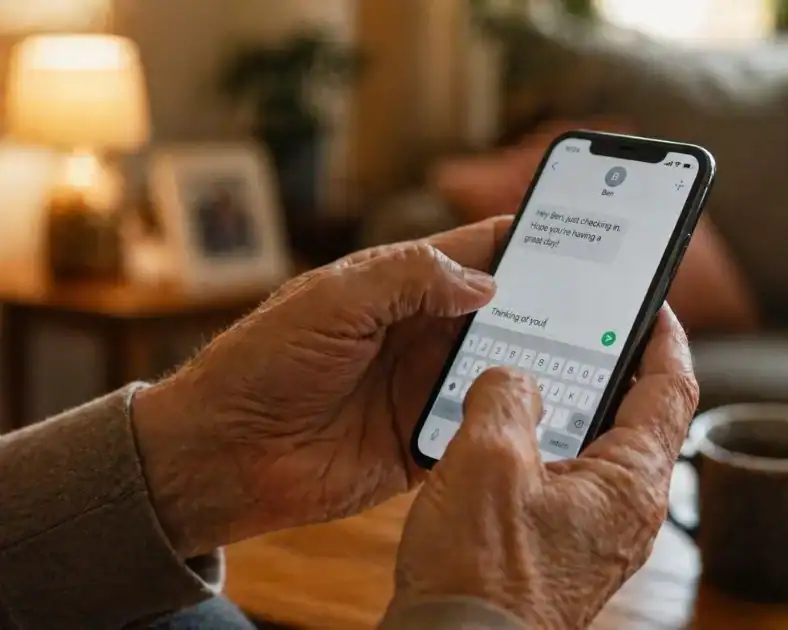
A quarter century later, his response to one of my Electronic Hugs:
“I’m not sure I’ve ever officially thanked you for all the great times we’ve had. But genuinely, they meant more than you’ll ever know. I didn’t have a lot of great memories with anyone as a kid. Pretty much all of those came from you. Best of all, I learned from you how to pass that same gift down to other kids.”
That is the point. Not perfection – partnership. Not control – connection. Not being right – being helpful.
What’s Coming
The Bridge To Your Grandchildren: What Their Parents Want You To Know is built for grandparents who want to stay in the room – not just physically, but in the lives, memories, and futures of their grandchildren.
It’s for grandparents who sense the distance growing and want practical ways to close it. It’s for adult children who wish their parents understood what they actually need. And it’s for every family where the grandchildren are quietly hoping the adults will figure it out.
More details coming soon. In the meantime, explore the full resource library at caringgrandparents.com – nearly 500 articles to help you show up better for the people you love most.